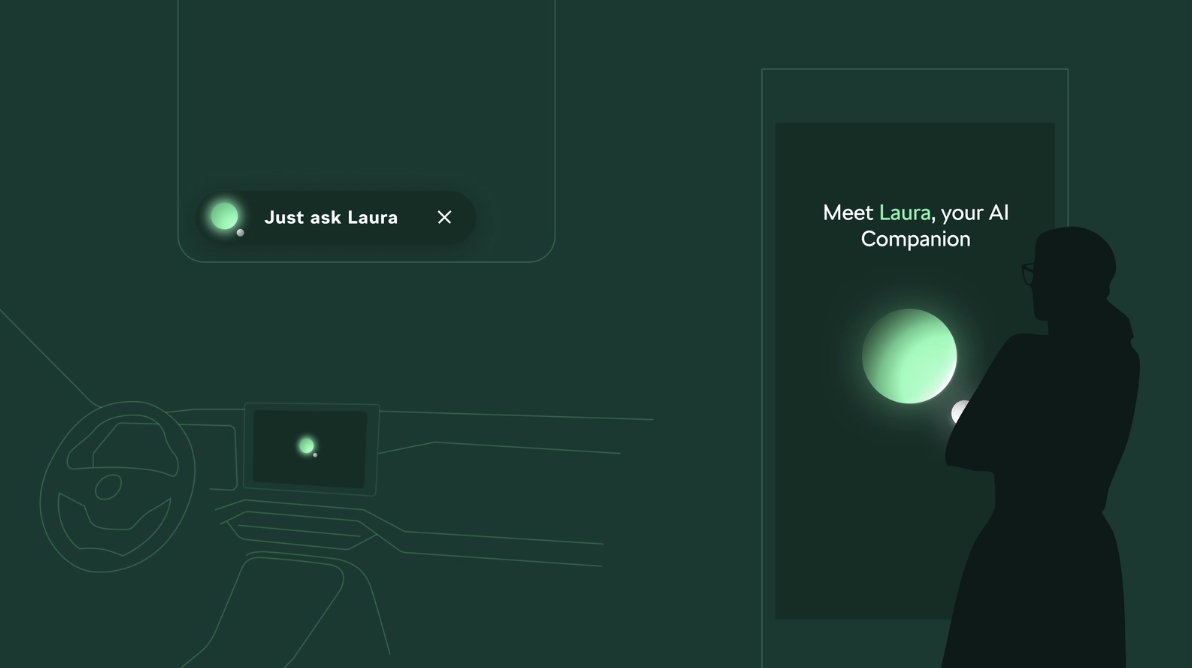
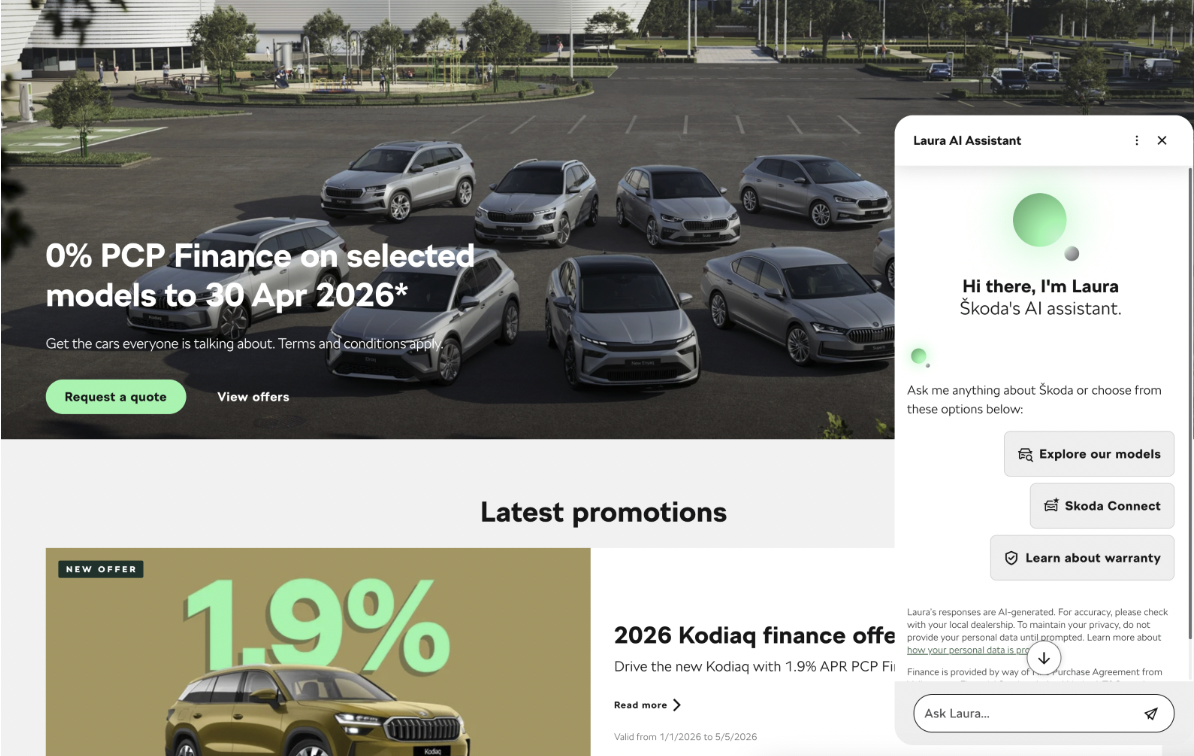
Web-based Laura is entering a new generation — and from a development perspective, this is not just an evolution, but a significant shift in approach. The original, primarily rule-based chatbot is transforming into an AI assistant powered by generative models, capable of working with dynamically generated responses and the context of the entire conversation instead of predefined flows. This introduces new demands not only on the backend, but also on the frontend itself — from handling streamed content to the flexible rendering of various output types.
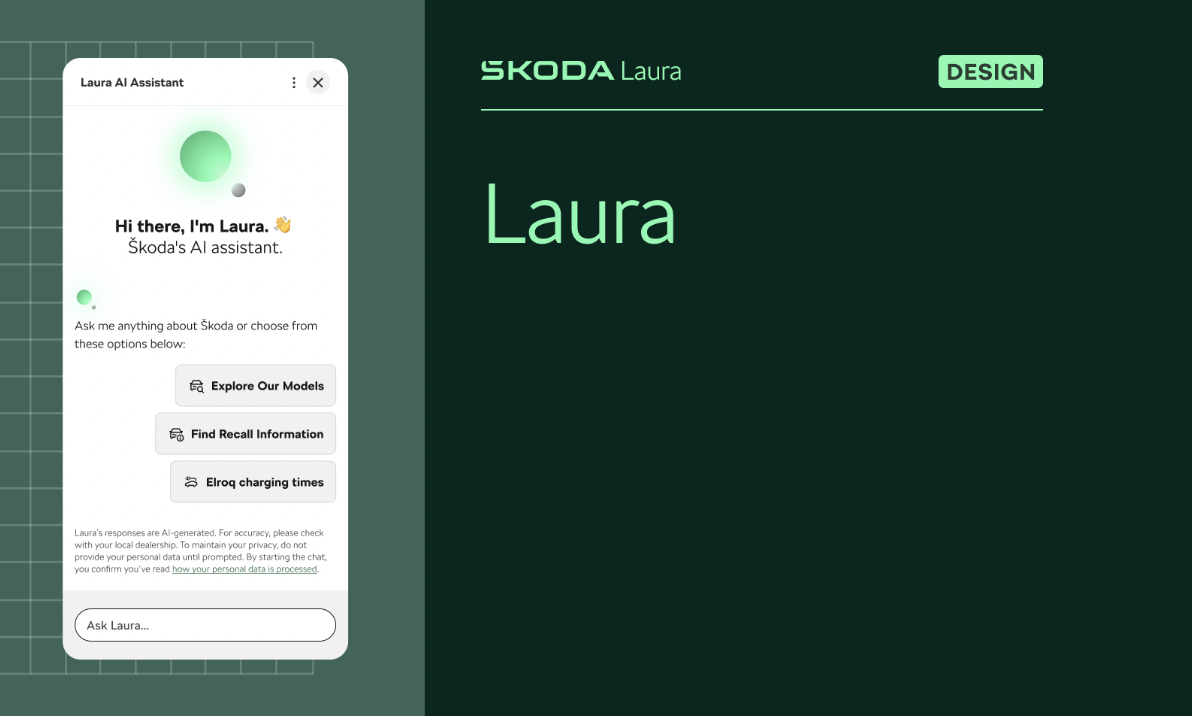
For the web touchpoint, we therefore built a custom React application connected to a .NET-based BFF layer. Communication is handled through a combination of REST APIs and websocket streams, which deliver responses progressively in the form of chunked text. This allowed us to render responses incrementally and significantly improve the perceived performance of the entire application.
One of the main challenges was content processing and rendering. AI responses arrive as markdown, which needs to be progressively parsed and animated. In addition, we designed custom JSON contracts for so-called custom elements — such as buttons, galleries, and other interactive components that the agent sends to the frontend and which are dynamically rendered within the conversation.
Application state management was handled using Zustand, while another important part of the solution was synchronization between browser tabs using the Broadcast Channel API. Thanks to this, conversations remain consistent even when working across multiple tabs, which is essential for applications of this type.
The frontend is built on top of the Škoda Flow Web Library, which provided us with a solid foundation in the form of a design system and reusable components. In most cases, we used these components directly or adapted them to the needs of specific use cases, which significantly accelerated development.
The application was first deployed to the importer production website in Ireland, where the pilot rollout took place. It will subsequently be gradually expanded to additional markets.
This article focuses primarily on the web frontend, which was fully delivered by our team. However, we were also involved in other parts of the solution, including conversational logic design, backend development, infrastructure, and integrations.
We are proud that, as Green:Code and Etnetera Group, we can participate in the development of this platform together with other technology partners — helping push the future of AI-assisted experiences on the web even further.
%202.jpg)
%202.jpg)
%202.jpg)
.jpg)